Is Art Taught at Saudi Arabia Public School System
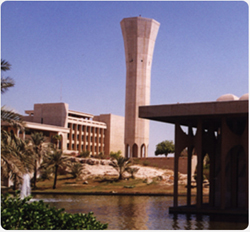
Saudi arabia's educational activity system has gone through an amazing transformation. When the Kingdom was established in 1932, education was available to very few people, mostly the children of wealthy families living in the major cities.
Today, Kingdom of saudi arabia'due south educational activity system includes over fifty public&and individual universities, with more planned; some 30,000 schools; and a large number of colleges and other institutions. The system is open to all citizens, and provides students with costless pedagogy, books and wellness services.
While the study of Islam remains at its core, the modern Saudi educational arrangement also provides quality instruction in diverse fields of arts and sciences. This diverseness helps the Kingdom prepare its citizens for life and piece of work in a global economy.
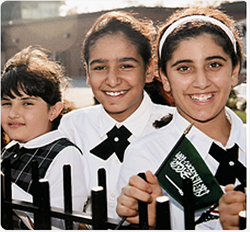
Education is a requirement for every Muslim, both male person and female. The Holy Qur'an and the Hadith [teachings and practices of the Prophet Muhammad] repeatedly emphasize the importance of learning.
In the centuries later the nascence of Islam (632 Advert), Muslim states established schools, universities and libraries that were unique in the globe. At a time when Europe was mired in the Dark Ages, the Islamic globe became a center for learning, making major contributions in the areas of astronomy, physics, art, philosophy, and medicine – a period known as the "Golden Age."
Methods pioneered by Muslim scholars and scientists during the Gilded Age became the foundation of modern sciences, and were taught in European universities up to the 18th century.
Formal primary educational activity began in Saudi arabia in the 1930s. By 1945, King Abdulaziz bin Abdelrahman Al-Saud, the country's founder, had begun an extensive plan to establish schools in the Kingdom. Six years later, in 1951, the country had 226 schools with 29,887 students.
The outset academy, now known as King Saud University, was founded in Riyadh in 1957. In 1954, the Ministry of Pedagogy was established, followed by the Ministry building of Higher Education in 1975.
The showtime government school for girls was built in 1964, and by the end of the 1990s girls' schools had been established in every function of the Kingdom. Today, female students brand up over half of the more than 6 1000000 students currently enrolled in Saudi schools and universities.
Full general Instruction
The Saudi educational arrangement aims to ensure that students are prepared for life and work in the modernistic earth, while meeting the country'southward religious, social and economic needs.
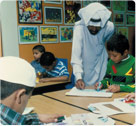
Eliminating adult illiteracy is another major goal.
General pedagogy in the Kingdom consists of kindergarten, six years of primary school and three years each of intermediate and loftier school.
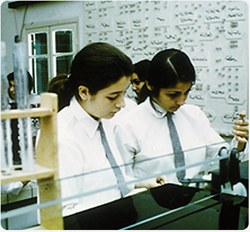
Subsequently elementary and intermediate schoolhouse, students can cull whether to attend a high school with programs in commerce, the arts and sciences, or a vocational school. In high school, students take comprehensive exams twice a year under the supervision of the Ministry of Education.
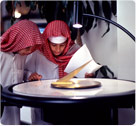
The educational curriculums at Saudi schools are diverse. They include a variety of subjects such as math, science, literature, history, Arabic and Islam. The Ministry of Instruction sets overall standards and oversees special education for the handicapped.
The government continues to improve educational standards by offering quality grooming programs for teachers, improving standards for student evaluation, and increasing the utilise of educational technology.
For example, in 2000 computer science was introduced at the secondary level. The administration of the educational organization has besides been improved by giving provincial schoolhouse boards greater controlling authority.
These efforts are paying off. Not only has the number of Saudi schools increased dramatically, but so has the quality of education. The Kingdom'due south student-to-teacher ratio of 12.5 to 1 is i of the lowest in the world.
Higher Education
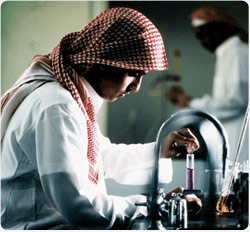
Saudi Arabia began focusing on higher education when the country entered a new era of rapid development in the early on 1970s.
In 1975, a divide Ministry building of Higher Instruction was established. The Ministry launched a long-term plan to make sure that the Saudi educational system provided the highly skilled manpower the Kingdom needed to run its increasingly sophisticated economy.
Ane of the plan's first objectives was to constitute new institutions of college teaching throughout the country and aggrandize existing ones. By 2014, there were 25 major public universities, a large number of vocational institutes, and a growing number of private colleges.
Another objective was to establish undergraduate and postgraduate programs in most disciplines at these universities and colleges. Equally a outcome, Saudi students can now get degrees in near whatsoever field in the Kingdom, and only pursue specialized report abroad if necessary.
Universities
Currently, about i 1000000 students are enrolled at Saudi universities and colleges, compared to 7,000 in 1970 – a dramatic improvement. Of those, over half are female. Women attend all major universities, as well as numerous all-female colleges and individual women's universities.
Saudi students too have the opportunity to pursue specialized graduate and postgraduate degrees abroad. Supported past government scholarships, thousands of Saudi students enroll in universities outside the Kingdom.
The oldest university in the country is Rex Saud Academy in Riyadh. When it first opened in 1957, but nine instructors taught 21 students. Today, 65,000 students pursue degrees at the faculties of art, science, commerce, applied science, agriculture, medicine, dentistry, nursing, didactics, information science and information science. The university offers doctorate programs in many fields and is particularly known for its engineering and medical schools.
The largest university in the Kingdom is King Abdulaziz University in Jeddah, with over 70,000 students. Information technology was founded privately in 1967 past a group of Saudi businessmen who believed strongly in the importance of pedagogy for national evolution. The university grew and so rapidly that in 1971, its founders petitioned the government to accept over its operation.
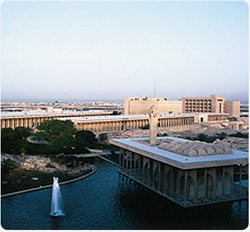
The Islamic Academy at Madinah, founded in 1961, is renowned every bit a center for Islamic studies, with graduates from over 100 countries.
Imam Muhammad bin Saud Academy in Riyadh (founded in 1974) and Umm Al-Qura University in Makkah (1981) have highly regarded Islamic constabulary, history and Arabic literature departments, in addition to programs in the arts and sciences.
Imam Muhammad bin Saud University offers programs in Islamic and Standard arabic studies at its branches in Nihon, Indonesia, Islamic republic of mauritania, Republic of djibouti and the United Arab Emirates.
The Eastern Province's Rex Faisal Academy, founded in 1975, offers a range of programs, including medicine and architecture, at its campus in Dammam. The Hofuf campus is specially respected for its outstanding agronomical and veterinarian sciences programs, its experimental farms, and advanced research in agriculture and animal husbandry.
Other universities in Saudi arabia include the King Fahd University of Petroleum and Minerals in Dhahran, 1 of the oldest (1964) and considered on par with the best in the world in that field; and Princess Nora bint Abdulrahman Academy (founded in 2007)the world'due south largest university for women with an enrollment of over 52,000 undergraduate and graduate students.
Saudi Schools Overseas
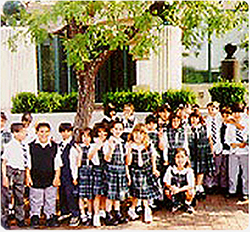
The Kingdom has established a number of educational institutions throughout the world for Saudi students living abroad. The 3 largest such institutions are located in the Usa, United kingdom and Germany.
These schools accommodate students from kindergarten through the 12th form, and provide didactics in Islam, and the Arabic language every bit well as the arts and sciences.
In an attempt to maintain a consistent standard, directors of these overseas schools meet regularly to discuss curriculums and other shared issues.
In the Washington area, the Islamic Saudi Academy (ISA), established in 1984, provides students with the opportunity to study Islam and the Arabic language as well as an American curriculum.
ISA is open to all interested applicants who are looking for an educational environment that is in accordance with the principles of Islam. It is an contained, non-profit educational institution.
Special & Adult Education
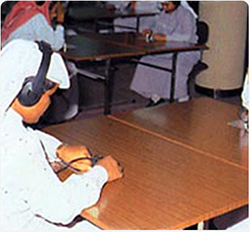
The Special Education Department of the Ministry of Education operates schools for the blind, deaf and the physically and mentally disabled. There are other institutes that intendance for elderly disabled people.
These special schools are part of the Kingdom's attempt to encourage every private to reach his or her full potential.
Adult educational activity is another important part of Saudi arabia'southward educational program. The Kingdom established a large number of developed education centers in gild to brand education available to everyone and to eliminate illiteracy. For people living in isolated rural areas, the government conducts intensive iii-calendar month developed education courses during the summer.
These efforts are clearly paying off: The Kingdom'southward literacy charge per unit is over xc pct for men, and but over 70 percent for women. The literacy charge per unit for children under 15 is 89.2 per centum for boys and 93.2 pct for girls.
Grooming in Saudi Arabia
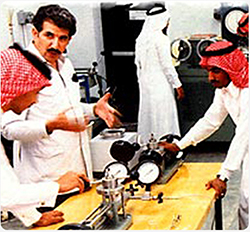
Technical and authoritative training is an essential part of education in the Kingdom.
At that place are numerous public and private training institutions that produce thousands of graduates in the technical and mechanical sciences, wellness intendance, agriculture, pedagogy and other areas every year.
These institutions include the Royal Technical Found in Riyadh, the Hofuf Technical Grooming School, and centers in Jeddah, Madinah, Abha, Taif, Unayzah, Dammam and other cities. They train thousands of young Saudis in a variety of fields, including machine tooling, metalworking, electromechanics, machine mechanics, electronics and maintenance of industrial machinery.
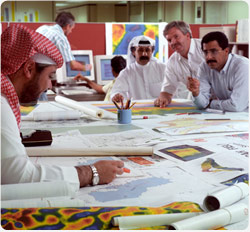
Another important institution is the Institute for Public Administration in Riyadh. Established in 1961 every bit a semi-independent public agency, the institute offers courses in administration, police force, accounting, informatics, maintenance, personnel management, secretarial skills and management planning. Today, the institute has branches in Dammam and Jeddah, equally well every bit a special branch for women in Riyadh.
Most of the Kingdom'due south vocational training centers and higher institutes of technical education are operated past the Full general Arrangement for Technical Teaching and Vocational Training (GOTEVOT), along with the Ministry of Labor and the Ministry building of Social Affairs.
The Ministry of Didactics runs vocational secondary schools, and several other government agencies operate institutes or preparation centers in their detail specialties. There are also a number of individual training centers meeting the needs of the market.
Source: https://www.saudiembassy.net/education
0 Response to "Is Art Taught at Saudi Arabia Public School System"
Post a Comment